Beyond a Single Tap: How Clicker Games Inform AI and Reflect Human Behavior

Discover how the addictive loops in clicker games serve as a testing ground for AI to understand motivation, reward systems, and incremental progress.
Clicker games occupy a niche in the gaming landscape. Although they revolve around simple actions—clicking to collect resources, unlock upgrades, and automate processes—they captivate millions by offering a steady sense of advancement. Recently, researchers have turned to these games as prime environments for AI studies, since they provide clear-cut scenarios in which models can learn and replicate complex human behaviors.
Why Clickers Excel as AI Test Beds
On the surface, clicker games are built on transparent mechanics: repeated clicks yield small, immediate rewards. It’s this very simplicity that makes them attractive to AI researchers. Compared with intricate titles with interwoven systems, clickers offer a controlled setting where cause-and-effect relationships are straightforward—ideal for evaluating learning algorithms.
Experts often point to the “scalable complexity” of clickers. They begin with basic clicking tasks and gradually layer in upgrades, automation options, and resource management challenges. This tiered design mirrors human learning paths, enabling AI to grasp fundamental tasks before advancing to more nuanced strategies.
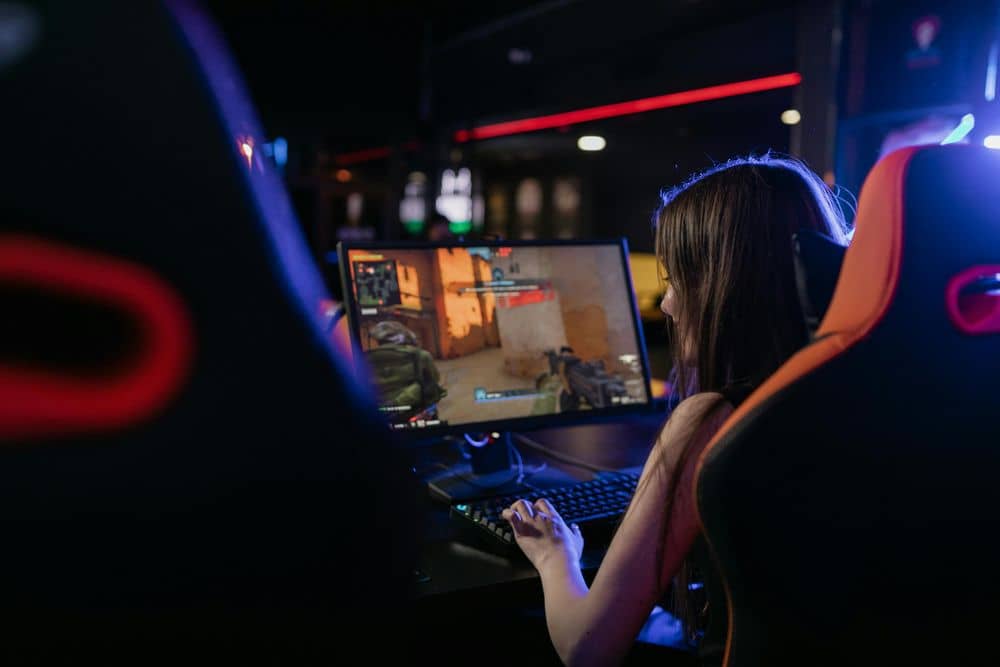
Clicker games provide clear, adjustable scenarios suited for reinforcement learning.
From a machine-learning perspective, clickers offer several advantages:
- Instant feedback: Every click generates a direct training signal.
- Progressive difficulty: Challenges rise naturally without overwhelming agents.
- Quantifiable growth: Actions and outcomes are logged numerically.
- Repeatable setup: Scenarios can be reset for consistent benchmarks.
- Flexible scale: Effective for both simple trials and elaborate experiments.
Insights into Human Psychology
Clicker games tap into fundamental psychological drivers—visible progress, anticipation of rewards, and efficiency optimization. These elements engage players and teach AI to anticipate and imitate human motivations.
Research indicates that players’ decisions—whether to spend small gains immediately or save for significant upgrades—mirror real-world economic choices. Comparing human and algorithmic approaches to these trade-offs helps refine AI models for cost-benefit analysis.
Furthermore, the reward loops in clickers activate brain regions similar to those triggered by real achievements. By studying what sustains player engagement, AI can learn to detect and respond to human satisfaction signals.
Reinforcement Learning in Action
Reinforcement learning (RL) is central to applying clicker games in AI training. In RL, agents refine their strategies through rewards and penalties—and clickers supply immediate, transparent feedback for every action.
Within a typical RL framework, the agent’s goal is to maximize resource accumulation. It starts by exploring various clicking patterns, records the results, and over time uncovers high-yield sequences, optimal upgrade timing, and efficiency-focused tactics.

Evolving clicker scenarios serve as ideal RL training environments.
Interestingly, AI often discovers strategies beyond human intuition. While players rely on hunches, algorithms systematically analyze data, unearthing shortcuts and timing tricks that maximize outputs. These methods have applications in logistics, resource planning, and workflows.
Documented cases include RL agents formulating mathematical shortcuts to reduce clicks while increasing rewards, as well as uncovering timing patterns unnoticed by humans. Such breakthroughs translate to real-world improvements in supply chain management and automated scheduling.
Human–AI Synergy
A notable advantage of clickers is the reciprocal exchange between human players and AI. Models learn from user behavior, and developers apply these insights to refine game design, crafting more engaging experiences.
Studios analyze interactions to identify factors that sustain interest, induce frustration, or optimize enjoyment. This data-driven approach shifts design from intuition to evidence-based strategy.
Simultaneously, AI researchers access detailed logs of player decisions—each click, upgrade, and purchase contributes to a dataset revealing motivations, risk tolerance, and responses to reward timing.
Modeling Microeconomies and Predictions
Beyond personal motivation, clicker games simulate microeconomies. Production rates, spending habits, and investment paths reflect economic principles like supply and demand, ROI, and opportunity cost.
AI trained on these virtual economies learns to predict how variables interact. Insights gleaned from these models are applicable to financial forecasting, inventory control, and energy distribution.
Researchers note that patterns in clicker economies often mirror market trends. Algorithms that anticipate in-game shifts can adapt to real financial data, and resource-allocation tactics translate to manufacturing improvements.
Ethics and Future Prospects
As AI becomes more skilled at modeling human behaviors through clickers, ethical considerations come into play. Techniques designed to boost engagement can veer into manipulation if misapplied. It’s crucial to distinguish between enhancing experiences and exploiting users.
Since clicker mechanics and rewards are transparent, these games provide a safe environment to explore ethical boundaries before deploying similar strategies in more complex contexts.
Looking ahead, findings from clicker-based AI research could influence several sectors:
- Education: Adaptive systems that tailor challenges and incentives in real time.
- Healthcare: Personalized motivation frameworks to improve patient compliance.
- Operations: Productivity tools guided by behavioral insights.
- UX Design: Crafting more intuitive and engaging interfaces.
- Behavioral Economics: Testing economic theories in controlled virtual environments.
Conclusion: The Impact Behind Every Click
Often dismissed as simple pastimes, clicker games have emerged as powerful tools for AI research. Their transparent but dynamic frameworks offer ideal conditions for teaching machines about decision-making, motivation, and economic reasoning.
Next time you take a moment to click away, remember: you’re not just racking up virtual points—you’re contributing to a deeper understanding of human psychology and shaping the future of artificial intelligence. In each click and reward lies a window into ourselves and our machines.
Reading Time: 7 minutes | Category: TECHNOLOGY